
Preventing Rodent Problems…
As the temperature dips, rodents love to warm up in your home’s nooks and crannies just as much as you do. But, there’s good news! You can keep these unwanted invaders out with a few simple housekeeping practices:
- Seal entry points: Inspect your home’s foundation, walls, and around windows and doors for any cracks or gaps, and seal them with caulk, steel wool, or other appropriate materials.
- Door sweeps: Install door sweeps on exterior doors to block small gaps at the bottom.
- Food storage: Store all food—including pet food—in airtight containers, especially in pantries and kitchens.
- Garbage management: Use tightly sealed garbage bins both inside and outside your home.
- Remove clutter: Declutter your home and remove any unnecessary items that could provide hiding places for rodents.
- Outdoor maintenance: Clear away debris from around your home’s foundation and store firewood off the ground.
Hantavirus in New Mexico
The Basics
Hantavirus Pulmonary Syndrome is a sometimes fatal, respiratory disease caused by a virus transmitted by some species of rodents. Cases occur sporadically and are usually associated with heavily infested buildings in rural areas where the rodent hosts live.
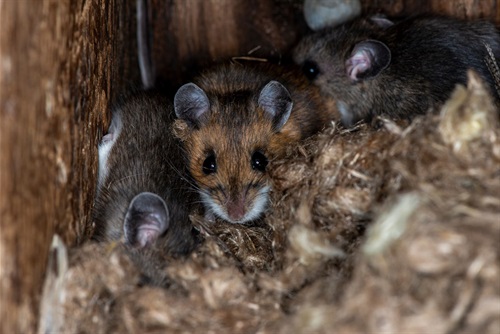
In New Mexico, deer mice are the primary carriers of hantavirus. The virus is found in mice droppings and urine, and individuals are typically exposed to hantavirus in certain settings including places where animal or human food and warmth is found, such as around their homes, cabins or sheds, especially when cleaning out or exploring enclosed areas with mouse droppings.
Symptoms typically develop within one to six weeks after rodent exposure and may look and feel like the flu or a stomach bug. Individuals with HPS may experience fever and muscle aches, possibly accompanied by chills, headache, nausea, vomiting, diarrhea, abdominal pain and cough, which can progress to respiratory distress and severe illness. There is no specific treatment or vaccine for hantavirus, so prevention of exposure to the virus is key. The type of hantavirus present in the United States cannot be transmitted from person to person.
Most human cases of hantavirus occur in the spring and are associated with buildings that became heavily infested with rodents seeking winter shelter. Preventing rodents from entering human structures is the best way to eliminate the risk for hantavirus.
Prevention
- Avoid exposure to rodents and their nests – and reduce the risk of contracting hantavirus – by following these important steps:
- Air out closed‐up buildings such as cabins and sheds, as well as abandoned or stored vehicles before entering.
- Trap mice until they are all gone.
- Seal up homes and shelters to prevent rodents from entering.
- Soak nests and droppings with a disinfectant such as a 10% bleach solution before cleaning them up.
- Do not sweep up rodent droppings into the air where they can be inhaled.
- Put hay, wood, and compost piles as far as possible from your home.
- Dispose of trash and junk piles.
- Do not leave your pet’s food and water where mice can access it.
For more information about this virus, including fact sheets in English and Spanish, visit the Department of Health’s HPS webpage.

How to Prevent Rodents From Chewing Your Car Wires
Here on the Pajarito Plateau, vehicles can be prone to rodent infestation. Proper prevention can help avoid any issues:
Place Traps Around Your Vehicle
Traps are one of the most affordable yet effective methods to stop rats and mice from entering your car engines. To make the trap more effective, you may want to keep in mind a few tips:
Use more enticing bait: Though rats and mice eat and feed on any food that they can find, some foods are more enticing than others. For example, peanut butter and hazelnut spread works better than other food since these creatures are more attracted to nuts and its byproducts.
Never handle bait with bare hands: Using bare hands to handle bait can contaminate it with a “human smell” and make it less appealing for rodents.
Use different traps: Using only one kind of trap may not solve the problem completely. Instead, you might want to buy and place different kinds of traps around your vehicle and assess which kind works the best.
Check the trap regularly: Checking the trap regularly includes the following: changing the bait regularly, checking if the trap accidentally set off, and checking if the trap has caught any rodents.
Use Deterrents to Repel Rodents
Rats and mice have a sensitive sense of smell so certain items with strong scents can help keep them away. One of the best items to use for repelling rodents is peppermint oil. Spray the peppermint oil on your car wires to deter rodents from your vehicle.
You can also wrap your car wires with rodent-deterrent tape. This kind of tape is laced and treated with capsaicin, a chemical that naturally occurs in chili peppers and makes it spicy. Rodents that chew on this wire will find the taste unpleasant and will learn to leave your car wires alone.
Block Entrances to Your Vehicle
A car’s vents and hood scoops provide rats and mice with easy access to climb and chew on car wires. To prevent this, you can choose to install a mesh wiring coated with hot sauce or poison on any openings.
Another way to block rats and mice from entering your vehicle is to park it inside a sealed garage. Seal any access points in the garage, like small gaps and cracks. Use a compound of steel wool and caulk.
Keep Your Car Hood Up
Keeping your car hood up prevents it from becoming a dark, warm place for rats and mice to nest and burrow.
If you’re parking your car on the street and don’t want to leave your hood up, you can choose to place some lights on the engine or underneath the vehicle so that rodents don’t become comfortable with its coziness.
Remove Hiding Places Near the Car
Any shrubs, tall grass, and tree limbs provide rodents with easy access to climb your car. When parking your vehicle in open spaces, it’s best to stay away from places with plenty of plants and trees. If possible, you may also choose to trim the grass or shrubs that serve as hiding places.
When parking a car inside the garage, check the place for any clutter that can serve as hiding or nesting places for rats and mice.
Run Your Vehicle Regularly
To prevent mice from staying and breeding in your car engines, make it a point to run your vehicle regularly even if you have nowhere to go. The engine’s sound is loud enough to scare rodents away and make them think that the car’s engine is a dangerous place to enter.
Rodents prefer stability, so driving your car frequently makes it less likely for them to take up residence.
Avoid Leaving Food in the Car
Rodents are almost always looking for food, so any food makes your car more attractive to the pests. To prevent them from climbing into your vehicle, clean your car regularly and remove any crumbs, food packaging, or scraps that you find inside.
Garbage cans and any dog or cat food stored in bins are delightful resources for rats and mice, so it’s recommended that you place pet food and garbage cans away from your car.
Cover exposed wires
Cover exposed wires with plastic or steel conduits to make it difficult for rodents to access them.